Click on Pictures to enlarge/read and double click to reduce.


Imprints
that
fail
to
satisfy
the
general
specifications
often
result
in
thin
and
uneven
stands
of
vegetation.
Poor
design
features
and
their consequences include:
(1)
Imprints
that
are
greater
than
25
cm
(10-
inches) long can lead to rill and gully formation.
(2)
Imprints
that
are
too
widely
spaced
produce
thin
stands
and
cannot
store
enough
rainwater
to
control water runoff and erosion.
(3)
Imprints
that
are
too
shallow
because
of
insufficient
imprinter
ballast
do
not
hold
enough
water
for
seed
germination
and
runoff
and
erosion
prevention.
(4)
Imprinting
roller
cores
that
are
too
small,
diameters
less
than
50
cm
(20
inches),
tend
to
round
the
crests
of
imprints
due
to
excessive
sliding
and
shearing
actions.
This
rounding
results
in
excessive
tillage,
weed
seed
germination,
covering
of
existing
plant
litter,
and
damage to existing vegetation.
Imprint
size,
shape,
spacing,
and
pattern
are
designed
to
maximize
resource
funneling
and
the
safe
temporary
storage
of
rainwater.
On
level
ground,
each
imprint
can
hold
3
to
5
liters
of
water,
which
is
equivalent
to
5
to
9
surface
cm
(2
to
3.5
inches).
Imprints
are
V
shaped
troughs,
the
sides
of
which
funnel
rainwater
and
seed
to
the
line
at
the
trough
bottom
where
sufficient
water
concentration
and
infiltration
occur
to
effect
seed
germination
and
seedling
establishment.
The
bottom
of
the
trough
typically
forms
a
shrinkage
crack
on
drying,
thereby
eliminating
the
crusting
emergence
problem
often
associated
with
fine
textured
soils.
After
germination
and
emergence,
the
sides
of
the
trough
humidify
the
microclimate
and
shield
young
seedlings
from
excessive
sunlight and dry winds (Dixon, 1995).
The
preceding
functions
of
imprints
result
in
much
better
stands
of
seedlings,
faster
growth
rates,
and
higher
survival-all
relative
to
various
types
of
drill
seeders
including
no
till.
The
relative
benefits
of
imprinting
increase
as
slope
steepness
increases and annual precipitation decreases.
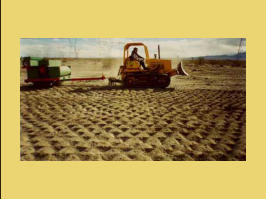

Click on pictures/diagrams/tables to enlarge/read double click to reduce.
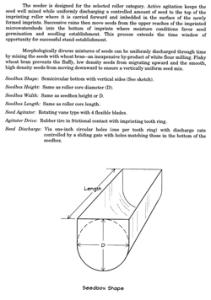
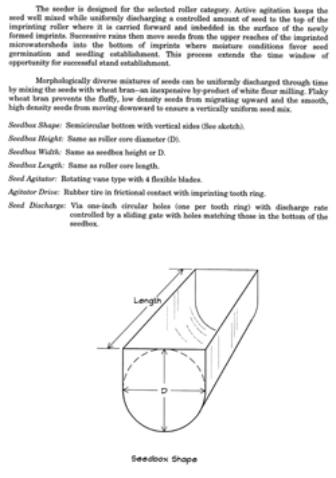
The Seeder
Specifications
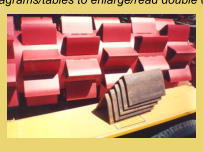
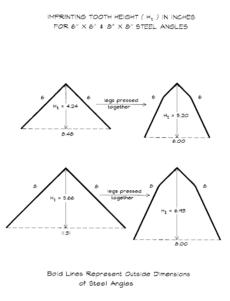
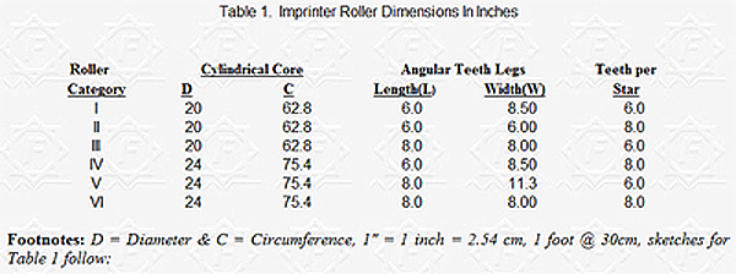
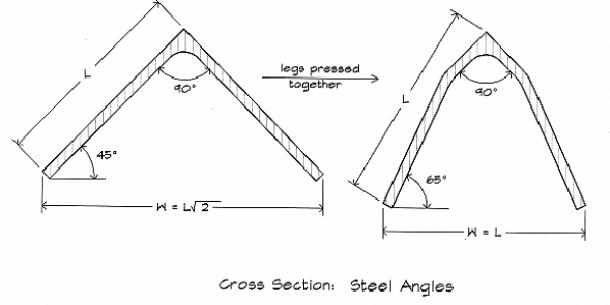
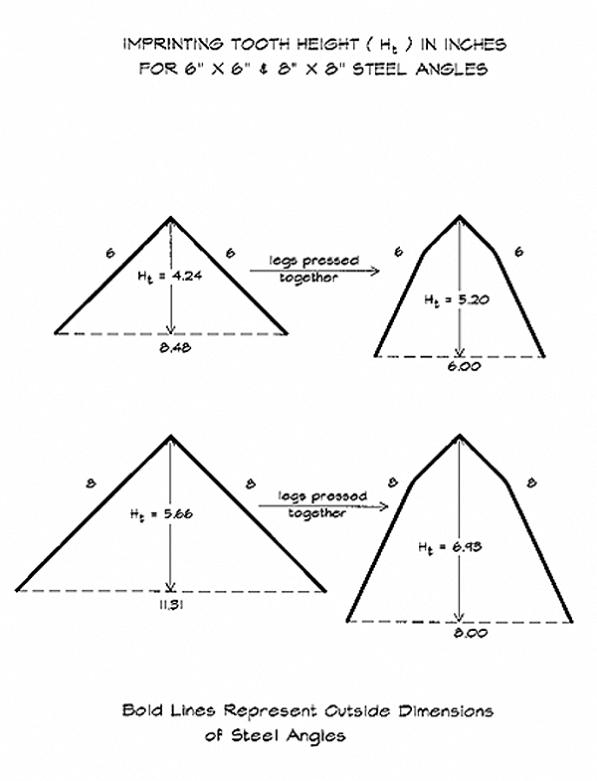
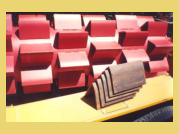
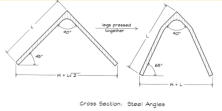
The Roller Blades (cont)

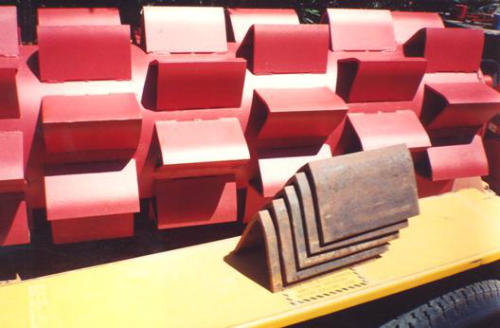
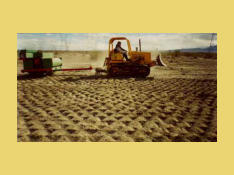
Category II, 7-foot imprinting roller designed
for revegetating steep slopes.
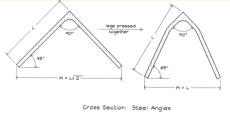
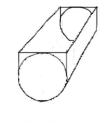
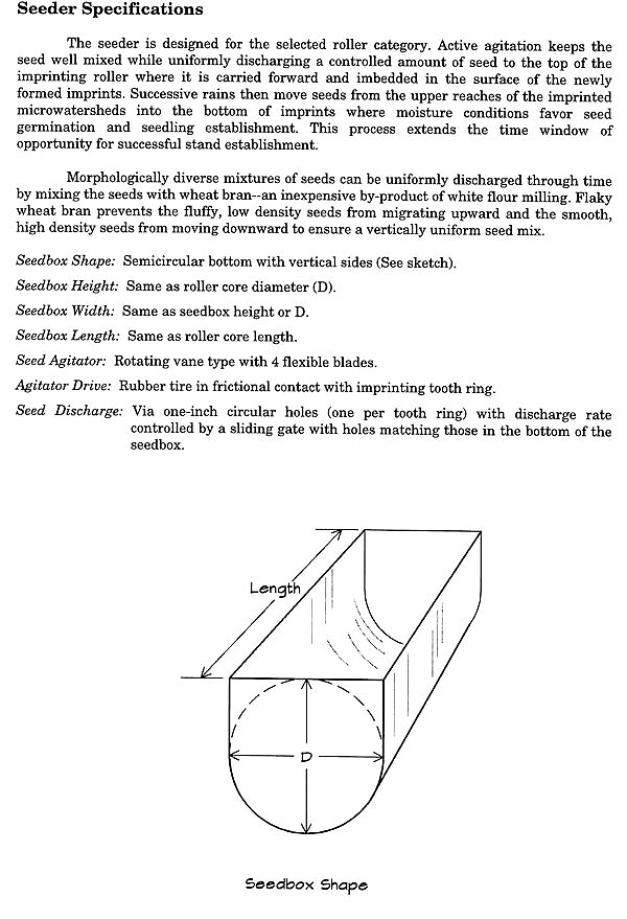
Seeder Box
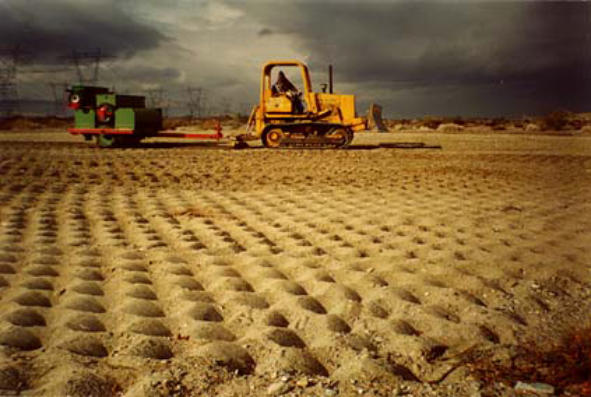
Imprints hold rain water in place
How the Imprinting Machine Works (cont)



THE MECHANICS OF the IMPRINTING MACHINE (cont)














To email us, click on logo to left




Imprints
that
fail
to
satisfy
the
general
specifications
often
result
in
thin
and
uneven
stands
of
vegetation.
Poor
design
features
and their consequences include:
(1)
Imprints
that
are
greater
than
25
cm
(10-
inches)
long
can
lead
to
rill
and
gully
formation.
(2)
Imprints
that
are
too
widely
spaced
produce
thin
stands
and
cannot
store
enough
rainwater
to
control
water
runoff
and
erosion.
(3)
Imprints
that
are
too
shallow
because
of
insufficient
imprinter
ballast
do
not
hold
enough
water
for
seed
germination
and
runoff and erosion prevention.
(4)
Imprinting
roller
cores
that
are
too
small,
diameters
less
than
50
cm
(20
inches),
tend
to
round
the
crests
of
imprints
due
to
excessive
sliding
and
shearing
actions.
This
rounding
results
in
excessive
tillage,
weed
seed
germination,
covering
of
existing
plant
litter, and damage to existing vegetation.
Imprint
size,
shape,
spacing,
and
pattern
are
designed
to
maximize
resource
funneling
and
the
safe
temporary
storage
of
rainwater.
On
level
ground,
each
imprint
can
hold
3
to
5
liters
of
water,
which
is
equivalent
to
5
to
9
surface
cm
(2
to
3.5
inches).
Imprints
are
V
shaped
troughs,
the
sides
of
which
funnel
rainwater
and
seed
to
the
line
at
the
trough
bottom
where
sufficient
water
concentration
and
infiltration
occur
to
effect
seed
germination
and
seedling
establishment.
The
bottom
of
the
trough
typically
forms
a
shrinkage
crack
on
drying,
thereby
eliminating
the
crusting
emergence
problem
often
associated
with
fine
textured
soils.
After
germination
and
emergence,
the
sides
of
the
trough
humidify
the
microclimate
and
shield
young
seedlings
from
excessive
sunlight
and
dry
winds
(Dixon, 1995).
The
preceding
functions
of
imprints
result
in
much
better
stands
of
seedlings,
faster
growth
rates,
and
higher
survival-all
relative
to
various
types
of
drill
seeders
including
no
till.
The
relative
benefits
of
imprinting
increase
as
slope
steepness
increases
and
annual precipitation decreases.
The Seeder Specifications
The Roller Blades (cont)

Category II, 7-foot imprinting roller
designed for revegetating steep slopes.
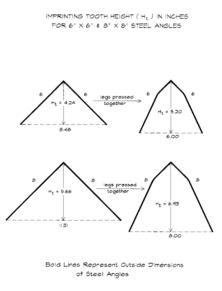
Seeder Box
Imprints hold rain water in place
How the Imprinting Machine Works (cont)
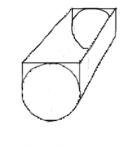


THE MECHANICS OF the IMPRINTING MACHINE (cont)










Email Web Mistress

To email us, click on
logo to left

click on pictures/diagrams to enlarge; double click to reduce